

Schmovement, secrets, and a whole lot of soul.
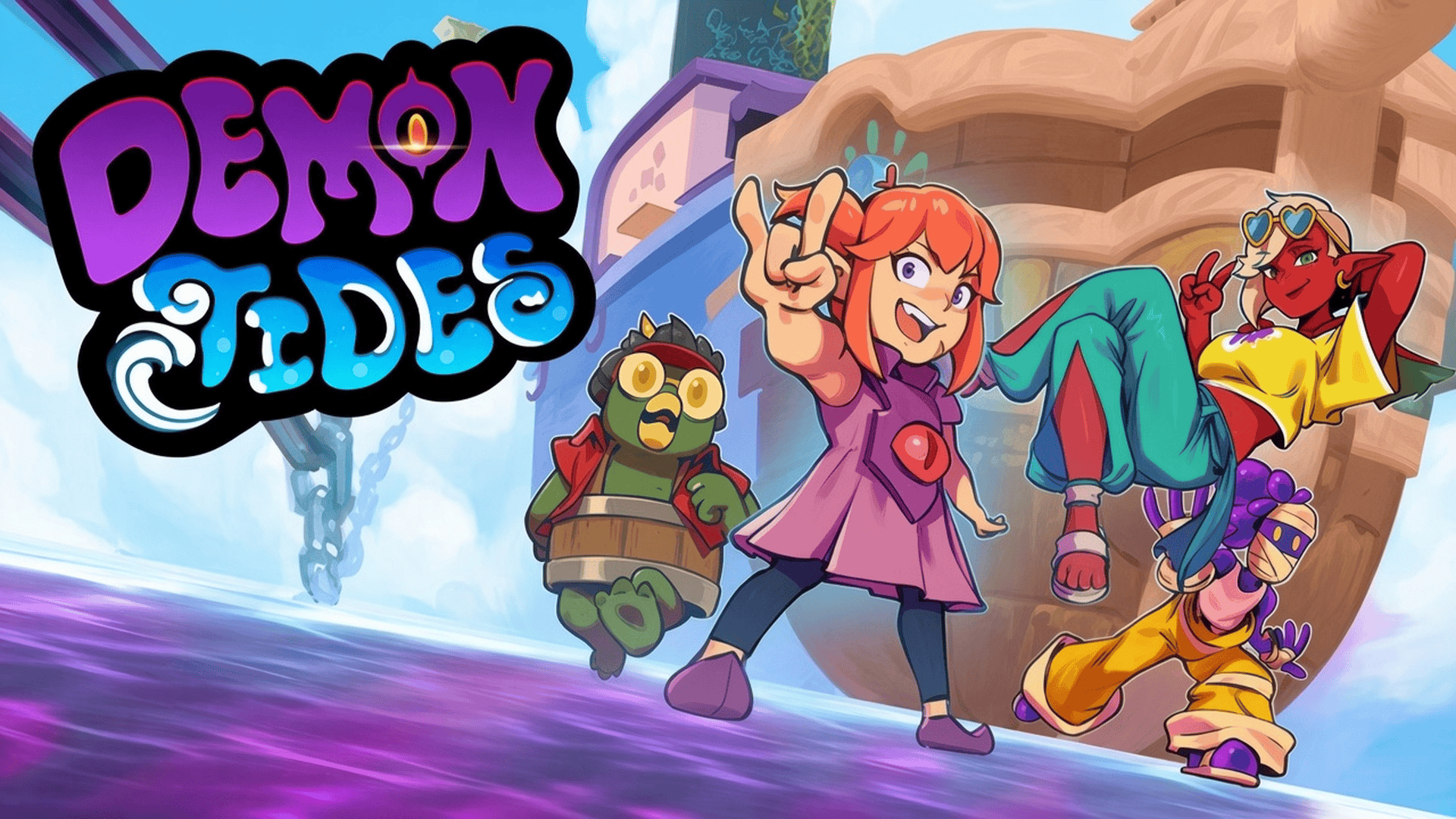
Developed and published by Fabraz, Demon Tides is the vibrant open-world 3D platforming sequel to Demon Turf. Following Beebz and her crew across the vast oceans of Ragnar’s Rock, the game launched on PC in February 2026 and is heading to Nintendo Switch, Nintendo Switch 2, and PlayStation 5 on January 21, 2027.
We recently had the pleasure of speaking with Fabian Rastorfer of Fabraz about the leap to an open ocean, the joy of refining Beebz’s expressive movement, the philosophy behind talismans and freedom, and the lasting feeling they hope players take with them. This is what we learned:
Fabian Rastorfer | Riding the Tides of Freedom in Demon Tides

Demon Tides expands significantly from the more contained structure of Demon Turf into a full open-ocean world. What was the biggest design challenge in making that leap while keeping the platforming feeling tight and responsive?
Fabian Rastorfer: We specifically picked the ocean-based approach because we knew it would work in our favor! The ocean allows there to be a lot of negative space between locations that doesn’t need to be filled with constant interactions, especially if you traverse that space quickly, and it also neatly encapsulates what explorable areas are! (They’re islands.) With that in mind it allowed us to create both a world that felt big, open and freeing, while still having concise, readable levels.
The movement in Demon Tides has been repeatedly called one of the most expressive and joyful in recent 3D platformers. How did you approach refining Beebz’s “schmovement” from the first game?
Fabian Rastorfer: We carefully analyzed what people liked from Demon Turf the most, as well as the least, and worked it up from there! The addition of the “boost” I think is a pretty significant factor to the move-set feeling more expressive than ever! It adds an additional layer to every single other move and differs depending on when you activate it. That’s expressive!
You give players almost the entire moveset very early. What was the thinking behind front-loading abilities rather than gating them more traditionally?
Fabian Rastorfer: We thought about adding limits initially but had a hard time picking what to remove. We also never loved the type of sequels where you lose all of your abilities again. (Looking at you, Samus.)
Instead we give you the full core move-set and instead rely on the talismans you can find across the open world which add/remove/modify your move-set significantly. In a way your own exploration leads to a further expansion of the move-set that you even get to combine yourself. The game is all about freedoms like that.
Talismans that meaningfully alter or expand the moveset are a core progression system. Can you talk about how you balanced power and personality when designing them?
Fabian Rastorfer: They were tricky! The hardest part with having 50 talismans that can dramatically alter/add upon your move-set is that you need to accommodate thousands of possible combinations. (Because you can equip up to five by the end.)
That basically meant months of QA finding potentially cool new possibilities or entirely busted ones. We even had to patch some we missed post-launch. Never underestimate speedrunners finding the craziest possible tech.
Overall there’s definitely a power creep towards the end of the game but I think that’s satisfying! Like in a Metroidvania, why wouldn’t you want to feel powerful as heck by the end of the game? That’s the whole point right?
The sea-serpent form and the ability to race across open water at high speed feel central to the sense of freedom. What inspired that traversal method?
Fabian Rastorfer: Demon Turf already featured the snake form but was entirely landlocked. It only felt natural to extend that form to allow it during swimming as well. Like this the traversal between islands is quick and snappy and feels like an extension of your move-set.
Ragnar’s Rock is split into distinct regions with dozens of smaller islands. How did you approach variety in both visuals and platforming challenges across those areas?
Fabian Rastorfer: For the regions we established the themes and subthemes initially and then worked out the details from there. Like, the second region “Shiverbeaks” will be cold. So what should we add? Glaciers, tundras, volcanic hotsprings, etc. The more we started filling out the region, the more wild the ideas became. That’s how we ended up with islands like “Dunkelwald” which suddenly turn the game into a horror one.
For mechanical variety we have one simple rule: Try to introduce something new in every single area and play with it as much as possible. Like this every location has something new to contend with.
Demon Tides has a very distinct punk-rock, colourful, slightly chaotic personality. How did the team protect and amplify that tone during development?
Fabian Rastorfer: We established the vibes pretty early on. We wanted to go colorful tropics this time and worked closely with Fat Bard and 2 Mello to have the OST reflect that, while still keeping the punk personality of Demon Turf. I think we succeeded!
Beebz’s relationship with her estranged father Ragnar forms a major emotional thread. How important was it for the story to carry real weight alongside the high-energy platforming?
Fabian Rastorfer: A lot of people wanted to learn more about Beebz in Demon Turf and we had a lot of fun fleshing it out. I feel confident that no one expected her background to turn out the way it did!
The added visual fidelity we’ve reached with Demon Tides also allowed us to be more cinematic when it comes to telling the story. I’m quite proud about how it turned out but it’s also an area we know we can still improve on further with learned experience.
Combining the comedic/warm tone of the game with the occasional dark shocker is just too fun not to do.
Customisation is extremely deep (outfits, headgear, hair dyes, etc.). How much of the development focus went into giving players that level of self-expression?
Fabian Rastorfer: A lot! And self-expression is the word. We didn’t just want the platforming to feel expressive. We wanted your talisman and outfit combinations to allow for player expression as well!
The outfits were a ton of work but I love how they turned out! It’s fun seeing players post selfies of their version of Beebz out in the wild. There are, literally, thousands of possible combinations.
Ghost racing and leaving graffiti that appears in other players’ worlds add a light asynchronous multiplayer layer. What made those features important to include?
Fabian Rastorfer: Halfway through development we felt like we wanted there to be a greater sense of community while exploring the world. Ghost racing was an easy extension to our leaderboard system but it’s the graffiti system we’re the most proud of! It takes the idea from Souls games but instead of relying on text it becomes a visual medium! It’s so awesome seeing how much more alive the world is thanks to everyone’s graffitis. There’s a ton that got a chuckle out of me, but I’m particularly fond of the ones hidden in hard to reach places. It’s like you’re sharing with a few select others that you also reached this spot.
Very happy that the graffiti system works cross-platform. Meaning new Switch 1, Switch 2, and PS5 players will get to see all the PC graffitis that already exist. There’s already thirty thousand of them, can you believe it?!
Demon Tides has been praised for feeling generous rather than punishing. Was there a conscious decision to reduce traditional 3D platformer friction (camera issues, unfair deaths, etc.)?
Fabian Rastorfer: I think part of it is the power creep I mentioned earlier. The other part that leads to this game feeling more forgiving than Demon Turf is that there’s no self-placed checkpoint limit anymore and significantly less voids of death. Oh, and the game isn’t a one-hit kill anymore either… So I guess there are a bunch of factors that led to this! That being said I still think the challenge feels right overall and is harder than most Mario games for sure.
Many players have noted that the game still feels great even when you’re just messing around instead of chasing objectives. How intentional was that “playground” quality?
Fabian Rastorfer: Absolutely. We wanted to create a world that is fun to move in just for fun. That’s why we have so many players with over 100 hours of playtime. They just tend to run randomizers or leaderboards because they don’t want to leave this world behind!
Demon Tides was developed alongside Bubsy 4D. Did working on two very different 3D platformers at the same time influence either project in unexpected ways?
Fabian Rastorfer: They share the same framework, so a lot of basic systems are similar. But overall they didn’t influence each other very much! We wanted both games to feel distinct from each other in key ways.
With the Switch, Switch 2 and PS5 versions now confirmed for January 2027, what technical goals did you set for each platform, especially the dual modes on Switch 2?
Fabian Rastorfer: For the Switch 1 our primary goal was to make sure it’s a very stable 30 fps and that it’s graphically still acceptable to look at. That includes not overly relying on dynamic resolutions.
For the Switch 2 we decided to give the player the choice of a quality or performance mode. Quality means high graphical fidelity at 30fps and while Performance means 60fps and medium graphical fidelity. I personally love playing in performance mode and think the game looks gorgeous in handheld.
For the PS5 we just wanted it to look as good as it possibly can. High graphical fidelity, 2k resolution and 60fps… You’re really not giving up on anything here!
How has the strong critical and player response to the PC version influenced the final polish or any additional content heading into the console launches?
Fabian Rastorfer: It didn’t really influence the porting process! Outside of cheering us up immensely of course!
The physical editions (Fangamer Switch bundle with Demon Turf, and later PM Studios versions) suggest strong confidence in the game’s lasting appeal. What does physical mean to the team?
Fabian Rastorfer: I think now, more than ever, having your games still appear as physicals is extremely important. Every game we’ve released since Slime-san has also received a physical version and we don’t want to imagine a future where that isn’t the case anymore. It’s the best way to preserve the legacy of our work and the only way players can properly own our game forever.
We’re extremely grateful of Fangamer and PM Studios in assisting us with this.
Looking back, is there any system or idea that almost didn’t make it into the final game that you’re particularly glad survived?
Fabian Rastorfer: The cross-platform graffiti server was extremely tricky to setup across all console platforms and we almost gave up on it for one specific platform. I’m glad we didn’t!
Demon Turf had a very specific indie charm. How did you scale that up for a bigger, more ambitious sequel without losing what made the original special?
Fabian Rastorfer: By staying true to our roots, having fun in making it, and getting more talented friends involved! I love my team to death and especially in a world full of depressing genAI I count myself lucky every day to work with them.
What kind of post-launch support or additional content are you most excited about exploring now that the game is out and heading to more platforms?
Fabian Rastorfer: Ah! We can’t quite reveal our cards yet but I can say this: We’re not done with the Demon series yet! Not even close! And maybe you’ll get to experience more shenanigans in the not-so-distant future…
After players finish Beebz’s journey across Ragnar’s Rock, what lasting feeling do you hope they carry with them?
Fabian Rastorfer: If, once time passes a bit, you look back at the game and feel nostalgic… That’s the feeling I’d be the most proud in provoking in you. That’d be magical.
We’d like to take this moment to extend our sincere thanks to the team at Fabraz for taking the time to share such open and thoughtful answers with us. We can’t wait to join Beebz and her crew when Demon Tides arrives on Nintendo Switch, Nintendo Switch 2 and PlayStation 5 in January 2027.
About Demon Tides:
Follow Beebz and her crew on a journey of self-discovery as they travel the vast oceans of Ragnar’s Rock in this vast platforming adventure!
Navigate the open seas and explore each distant structure, uncovering every hidden nook and cranny with a diverse, expressive move-set. Beat challenges or find hidden chests to collect talismans along the way that modify your abilities and allow you to express yourself through your schmovement. You can even switch up your drip with a plethora of discoverable outfits!
And never forget, you’re not alone in this journey! Compete with other players for speedrunning times by challenging their ghosts, or tag a wall and share your message with the entire world!
Are you ready to conquer this kingdom and expose all of its mysterious secrets? Or will Beebz be crushed by what awaits her? Only one way to find out!
Share this:

Discover more from
Subscribe to get the latest posts sent to your email.


