

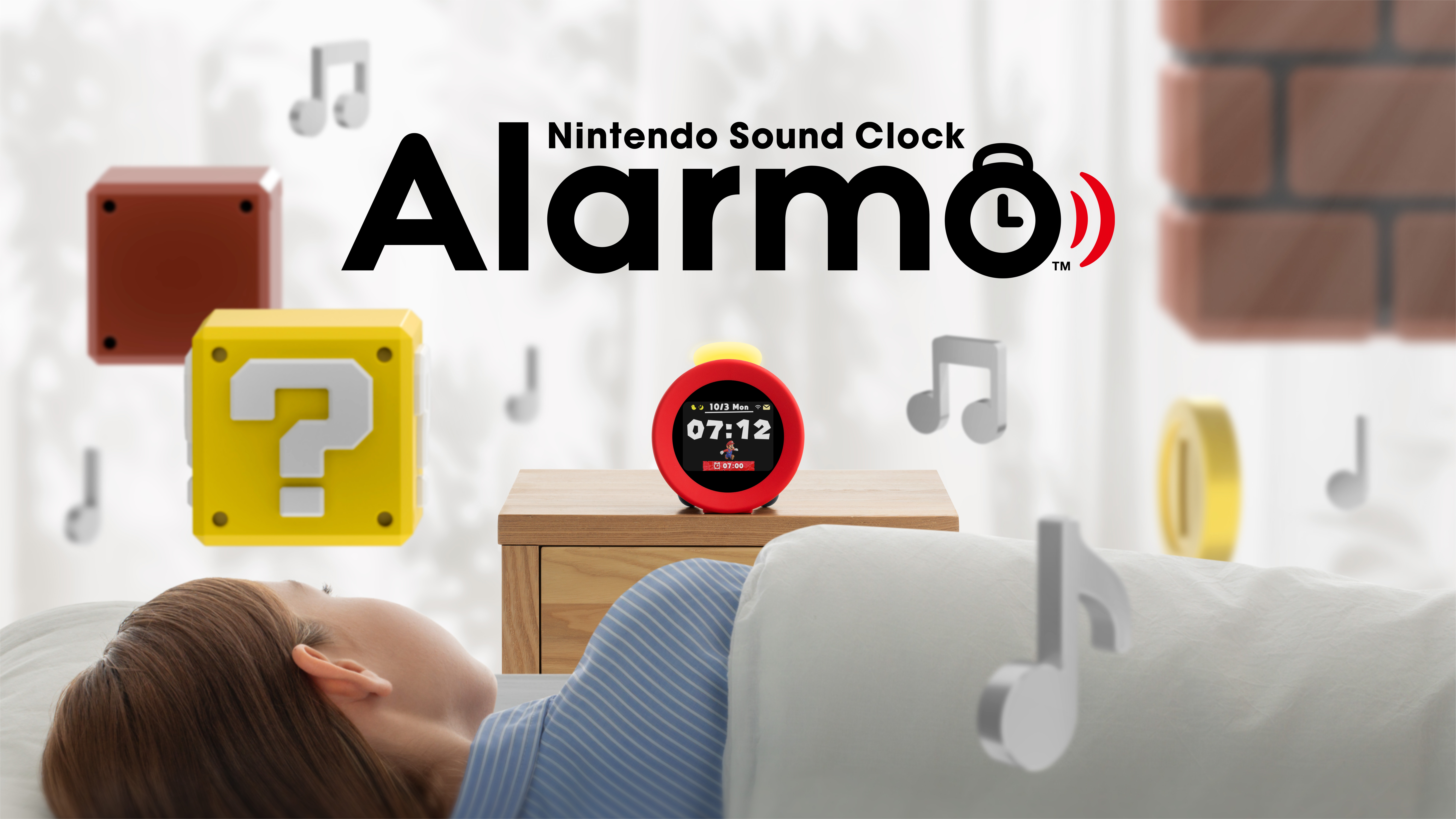
Just in case it wasn’t enough for Nintendo to shadow drop Nintendo Sound Clock: Alarmo on us, they also saw fit to ensure Alarmo was the latest project to be covered during their “Ask the Developer” interview series. Across four chapters, Producer Yosuke Tamori and Director, Tetsuya Akama were asked many questions, and now it is time to hear their answers.
When talking about Alarmo, Tamori and Akama spoke out about Alarmo’s different modes:
Nintendo Sound Clock | Alarmo Devs on Alarmo’s Different Modes and Chimes:
Yosuke Tamori: We’ve prepared three different modes to wake you up: Firm Mode, Gentle Mode, and Button Mode. In fact, during the initial development phase, there was only Firm Mode, but the way you wake up varies depending on the person. Personally, I can get out of bed quickly once my alarm goes off, but I didn’t know until after this project started that some people stay in bed and zone out for about 30 minutes before getting up. Some of those people were of the opinion that Firm Mode was too strong, so we added Gentle Mode, which lowers the volume and stops after just a little movement.
We recommend trying Firm Mode first, and if you find it too noisy, switching it to Gentle Mode. Also, by connecting Alarmo to the internet, you can add Moderate Mode, which is somewhere between Firm and Gentle, so you can choose whichever one you prefer.
The motion sensor is designed to be at its most responsive and function best when Alarmo is used by one person, but I’m sure there are many families who sleep together in the same room. Because of the nature of the sensor, even if one person gets out of bed, the sensor may detect that other family members are still in bed and continue to play the alarm. Of course, if everyone gets out of bed, it will stop. However, the situation varies depending on the household, so in order to accommodate a variety of circumstances, we added a mode that will stop the alarm when you press the dial button.
Tetsuya Akama: The development team is continuously testing the product to experience it firsthand and to improve its accuracy. Including Tamori-san and myself, about half of the development team members are using it in an environment where other family members are present, but I don’t think we’ve heard many complaints that it’s not user-friendly.
Another feature that families who use Alarmo like is the hourly chime. The hourly chime can be a very useful feature to help establish your daily rhythm, as it serves as a cue to go to school or work, or a reminder of your everyday routine. Of course, you can disable it if you prefer. The sound of the hourly chime and the on-screen presentation change depending on which game you choose to set, so it can be enjoyed in multiple ways.
The alarms for Alarmo were not produced by sound experts but rather by team members who worked on a project researching motion sensors, and based on the various things they learned about waking up during that time. As such, when developing the alarm sound, they considered how to make the waking-up experience easier and more comfortable instead of just using game music and sound effects. After that, of course, we had sound experts review and make final adjustments.
Yosuke Tamori: Besides that, we had an especially hard time optimising the alarm volume. Usually, when we develop game software, we think about people who are already awake, but this time we needed to develop it with sleeping people in mind. Contrary to when we create games, we needed to actually sleep to confirm if the alarm volume was right. Even if the alarm volume seems too low when heard at midday, it may be just right when heard while waking up. But the only way to really be sure was to sleep and see how we felt when we woke up. So, it was quite a challenge, as even one adjustment to the volume took a day to confirm.
For the full interview, why not click here to check out Ask the Developer Vol. 14, Nintendo Sound Clock: Alarmo – Chapter 4:
Ask the Developer | Nintendo Sound Clock: Alarmo (Participating Developers)
- Yosuke Tamori | Entertainment Planning & Development Division, Production Group No.4 (Producer)
- Tetsuya Akama | Technology Development Department, Technology Development Group No.1 (Director)
Share this:

Discover more from
Subscribe to get the latest posts sent to your email.