

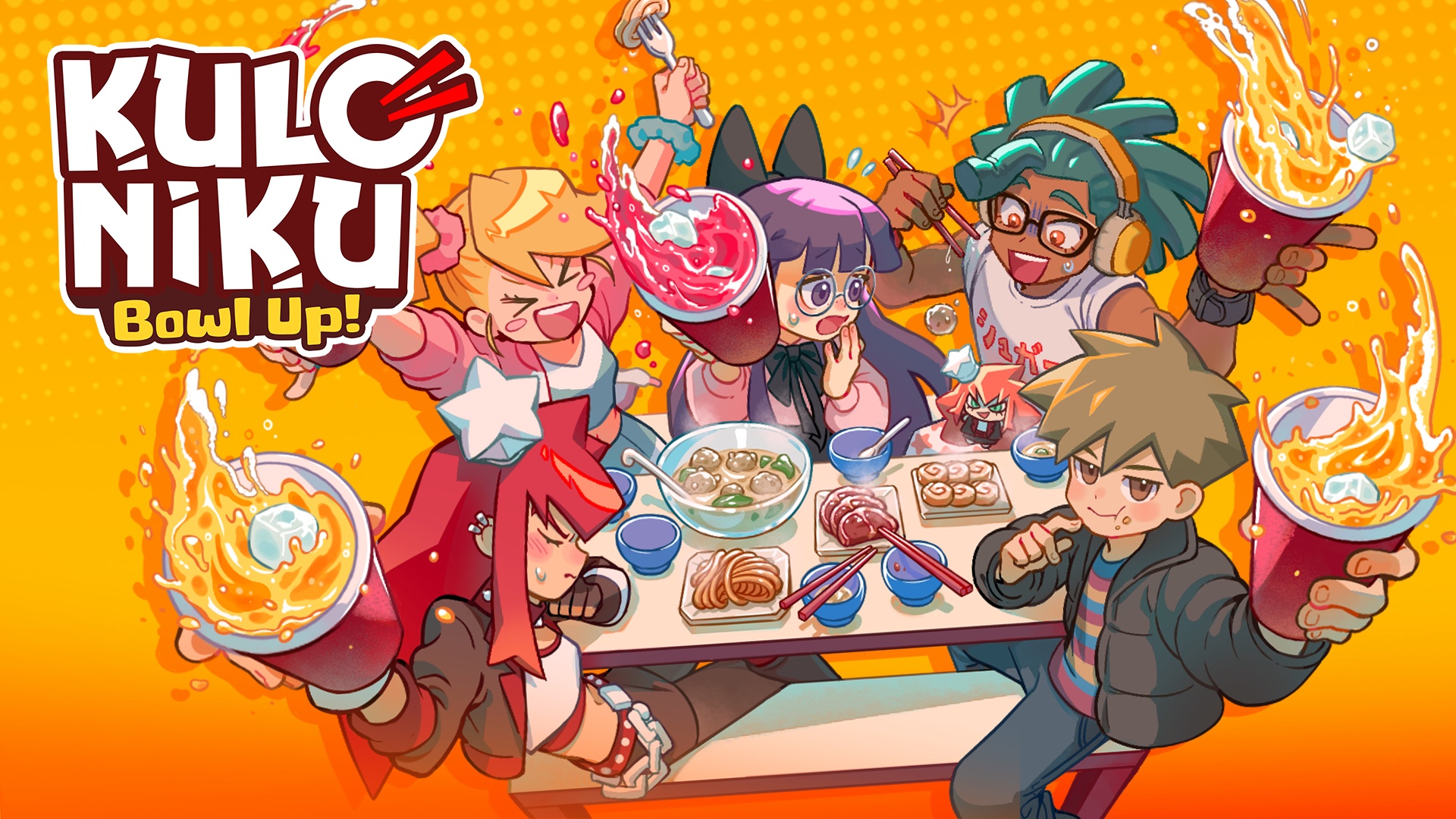
Yes, Chef!
Developed by Indonesian studio Gambir Studio and published by Raw Fury, KuloNiku: Bowl Up! is a first-person cooking and restaurant management game that puts you in charge of your grandmother’s once-famous meatball restaurant in the colourful town of KuloNiku. After launching on PC in April 2026, the game is heading to Nintendo Switch and Nintendo Switch 2 on November 25, 2026.
We recently had the pleasure of speaking with the team at Gambir Studio about the decision to make cooking fully tactile and first-person, the balance between cozy daily life and competitive Meatball Brawls, the Indonesian roots of the town and its residents, and what they’re most looking forward to as the game reaches Nintendo players. This is what we learned:
Gambir Studio | Cooking with Heart (and a Side of Rivalry) in KuloNiku: Bowl Up!

The decision to make cooking fully first-person and tactile is central to the feel of the game. What early prototypes convinced you this approach was better than more traditional top-down or menu-based cooking?
Gambir Studio: From the earliest prototypes, our game designer and programmer Gian has always designed the game to be first-person and tactile. What made us choose this approach was actually our experience with our previous cooking games; we’ve had experience in making top-down cooking games. And although they can certainly be fun, they’re not as immersive because the cooking process has to be simplified so much. So even early on, we know this is something that we want to build upon. The perspective and design philosophy never changed, only iterated and improved on.
How did the tactile, almost ASMR-like quality of the cooking become such a strong part of the game’s identity?
Gambir Studio: Immersion has always been our priority from day one. It’s inspired from real life cooking. When you get in the zone, cooking can be very relaxing and even therapeutic. That’s why we made sure that the cooking also feels satisfying in KuloNiku. And when we launched our early playtests, the playtester loved how the cooking felt, so we knew we were on the right track.
The cooking actions (chop, torch, skewer, pour, etc.) each have their own satisfying feedback. Which single cooking action went through the most iteration to feel right?
Gambir Studio: The chopping, because it’s also the most tactile one. Gian wanted to make each cut actually visibly cut and divide the ingredient, so there’s a lot of designing, modeling, and programming going into it. For example, we also want to give the player freedom in how much they can cut an ingredient. But we have to make sure that each slice of ingredient is still big enough to be visible to the player. And the game can’t have too many small chopped ingredients too, so the game can run smoothly. So it’s a delicate balance.
The town of KuloNiku and its residents feel very specific. How much of the setting and characters draw from real Indonesian food culture and small-town life?
Gambir Studio: About 50/50. We want it to feel familiar to the Indonesian small-town life while remaining accessible to a global audience. The main inspiration from Indonesian food culture is the customizability of food orders. When ordering bakso (Indonesian meatballs), people often customize their orders: more fried shallots, less noodles, no soy sauce, more chili sauce, and so on. That forms the game’s basic idea. Furthermore, to keep the game’s uniquely Indonesian feel, our in-house Indonesian localization uses casual language alongside local slangs and even memes.
Grandma’s restaurant carries a lot of emotional weight. How did you balance the heartfelt story of inheritance with the lighter, more chaotic cooking gameplay?
Gambir Studio: When we started working on the game, Gian told our writer Raka to keep the story on the lighter side. There are some emotional moments, of course, but the overall feel should still be lighthearted and zany, to fit in with the gameplay and art style. A big inspiration for the game’s tone is k-dramas, where the show usually starts lighthearted so the audience can more easily get into the story and characters, before getting into the more emotional moments.
Many players describe the game as both cozy and surprisingly competitive. Was that dual tone intentional from the start?
Gambir Studio: Not from the very start, but along the way, we realized that KuloNiku can go either way: more cozy and slow-paced, or more frantic and challenging. After even more iteration, discussion, and playtesting we decided to build a game that can be both. In the tutorial parts of the game, we introduced both the cozy segments (day-to-day cooking, building friendships) and the more challenging (Meatball Brawls and festivals). But from then on, the player can decide how much to engage with the different features. Much like how the KuloNiku customers can order food to their specific taste!
The game has a clear daily rhythm (cooking days vs free days with Brawls). How did you settle on that structure?
Gambir Studio: Early in the development, our designer Gian wants to make the game feel more cozy, after listening to feedback from our internal team, playtesters, and potential publishers at the time. He designed free days in-between the “work” days to keep the game feeling cozy and manageable. If the player only cooks day after day, it risks feeling like a chore.
Meatball Brawls are a major highlight. How did the competitive cooking battles evolve, and what makes a good “judge” panel from a design perspective?
Gambir Studio: The Meatball Brawls have gone through so many iterations. Previous versions were sometimes too complex, and sometimes too simple. But our main design idea is to provide a different and more tactical gameplay to the day-to-day cooking. That’s why we implemented the Crowd Meter and Bonus Ingredient systems too, so that using an ingredient affects the player’s score in various ways. That’s also how we designed the judge panel – by having different judges with different likes and dislikes, it challenges the player to think more strategically about which ingredients to put in.
Rival restaurant Souper Starz and chef Stella provide clear antagonistic energy. How important was it to have a strong rival presence rather than just generic competition?
Gambir Studio: Very important. Because we want to give the player a motivation to keep improving their restaurant and therefore engaging with the game’s features. A prideful rival like Stella is a good way to achieve that and we’re glad the players seem to love her for the most part.
The friendship system unlocks special locations and illustrations. What was the thinking behind making relationships a meaningful part of a cooking game?
Gambir Studio: One of the considerations is definitely to give KuloNiku a more unique identity. After all, many cooking games are very arcade-like in that the player just keeps cooking and cooking, so with a friendship system we hope it can help keep the player engaged as they run the restaurant. Another one is our experience with Selera Nusantara, our flagship mobile game. It’s also a cooking game, but with a quite involved story now in its fourth season. Many players have grown attached to the story and characters so we know this approach can work well with a cooking game.
Restaurant customisation and decorations can affect gameplay. How do you keep cosmetic upgrades from feeling purely superficial?
Gambir Studio: It’s definitely a challenge to balance. On one hand, we wanted to give the players the freedom to decorate their restaurant how they like, but we also wanted the decorations to give a gameplay buff, so each decoration would be more satisfying to unlock. In the end, we tie the gameplay buff to the decoration slot – for example, a ceiling fan – but not the specific skin. So the player can change the fan’s skin without sacrificing the buff.
The ingredient and recipe systems allow a lot of experimentation. How do you prevent players from feeling overwhelmed by options early on?
Gambir Studio: We make the cooking stations unlockable throughout the story, meaning we can pace how they’re introduced to the player. We also iterated on different timings to unlock the stations so that there’s always something new to unlock and enjoy in the main story, without overwhelming the player. And for more ingredients and recipes, they’re always optional. But we found out from our playtesting sessions that the players want to unlock them anyway for more variation in the orders that they get.
Festivals add variety to the town’s calendar. What role do these larger events play in the overall pacing of the campaign?
Gambir Studio: It’s a way to shake up the day-to-day gameplay. Festivals add additional challenges – like having to use certain ingredients or achieve specific flavor profiles – but with additional rewards too. This way, the player can spice up their experience a bit if they want to.
Endless Mode lets players focus purely on cooking. What kind of player did you have in mind when designing that mode?
Gambir Studio: We wanted to widen the game’s appeal to those players who prefer to cook only without engaging with a story. We also put in daily buffs and challenges which gives the game a roguelite element too, so we hope players who enjoy a more challenging gameplay would try the Endless Mode.
The game supports a relatively short main story (around 8–10 hours) with additional completion goals. How did you decide on that length?
Gambir Studio: It’s designed around the amount of the main cooking gameplay we can provide – unlocking the different cooking stations, ingredients, and recipes. Looking back, we even consider the main story slightly too long; we’ve committed to the main story beats but there are only a few items to be unlocked by the end of the game. But hey, that’s a lesson learned for our next game.
The Switch and Switch 2 versions are arriving several months after PC. What specific adjustments were made for handheld play and Joy-Con controls?
Gambir Studio: We wanted to keep the cooking feel satisfying, so we worked with our porting partner to find the best control scheme to make the action flow smoothly in the kitchen. We experimented with motion controls as well, but we found out that it can disrupt the game’s flow, so we only use it in a few parts in the final version.
Looking at player feedback since the April PC launch, which systems or features have people engaged with most differently than you expected?
Gambir Studio: Probably the characters. We didn’t expect to get so much love for these characters, with fan arts and even fan fictions about them. It makes us really happy and that’s why we keep adding new friendship stories to the game on our post-launch updates.
Raw Fury has a strong track record with distinctive indie titles. What made KuloNiku: Bowl Up! a good fit for their catalogue?
Gambir Studio: When we held meetings with Raw Fury, they mentioned that KuloNiku is actually a pretty different game to their catalogue at the time. But the team liked the demo that we sent and believed in the game’s potential. After all, Raw Fury is not very strict about genres as long as the game is enjoyable and well-made. That’s also why they arranged more playtest sessions and gave us a lot of feedback. It was pretty challenging at the time, but we pulled through because we knew we shared a vision. We’re very honored to be part of the prestigious Raw Fury catalogue!
With the game now expanding to Nintendo platforms, what kind of post-launch support or additional content are you most excited to explore?
Gambir Studio: First and foremost, we’re very excited to hear the feedback from our upcoming new players. We do have some additional content already planned for the upcoming months, but we always keep it flexible depending on what our community wants. Think additional decor, friendship scenes, and maybe even DLC. From everyone in Gambir Studio, we hope you’ll enjoy your time with KuloNiku: Bowl Up!.
We’d like to take this moment to extend our sincere thanks to the entire team at Gambir Studio for taking the time to answer our questions so thoughtfully. We’re genuinely looking forward to stepping into the kitchen when KuloNiku: Bowl Up! arrives on Nintendo Switch and Nintendo Switch 2 next week!
About KuloNiku: Bowl Up!:
Chop, boil, fry, torch, pour, sizzle, slice, and skewer in our cozy cooking game!
Ready to battle for the title of top eatery? Yes, Chef!
You’ve just inherited your grandma’s once-famous meatball restaurant in the cozy town of KuloNiku. Now it’s up to you to bring it back to glory as the top eatery! Take on eccentric orders from townsfolk, serve delicious meals, and restore your family’s legacy.
Beware—there’s fierce competition from the town’s flashiest rival: Souper Starz, run by the menacing rockstar chef, Stella!
- Chop, boil, fry, torch, pour, sizzle, slice, and skewer, and more with immersive, tactile controls that tickle your brain and make your stomach growl!
- Want to add an extra punch of garlic or a sprinkle of salt? Go for it. You’re the chef – find multiple ways to prepare your customers the perfect dish and rack up those juicy tips!
- Opt-in to special, timed festivals to earn vouchers and redeem them for unique items!
- Rival chefs want KuloNiku’s restaurant top spot, and there’s only one way to settle things: Meatball Brawls!
- In these thrilling culinary duels, you’ll go head-to-head to impress a panel of judges. It’s not just about speed – it’s about strategy, creativity, and mastering every step of the cooking process.
- Play mini-games to impress both the judges and the crowd watching live, who will issue on-the-spot requests to boost your score!
- Keep things fresh! Unlock new tools and cooking stations, purchase higher-quality ingredients, and discover brand-new recipes to keep your menu exciting.
- Personalize your restaurant with fun decorations in a variety of styles – even buy full sets! Decor isn’t just cosmetic; some items give gameplay perks to impress your customers.
- An eclectic cast of characters wait for you in KuloNiku – No matter friend or rival (or both??), they’ve all got stories to discover.
- Raise your friendship levels with a cast of companions to unlock special hangout locations, hand-drawn illustrations, and fun decorations!
- Uncover the mystery of your eye-raising past, save your grandmother’s restaurant, and grab the top-eatery title with the help of your new cooking-comrades!
Share this:

Discover more from
Subscribe to get the latest posts sent to your email.