

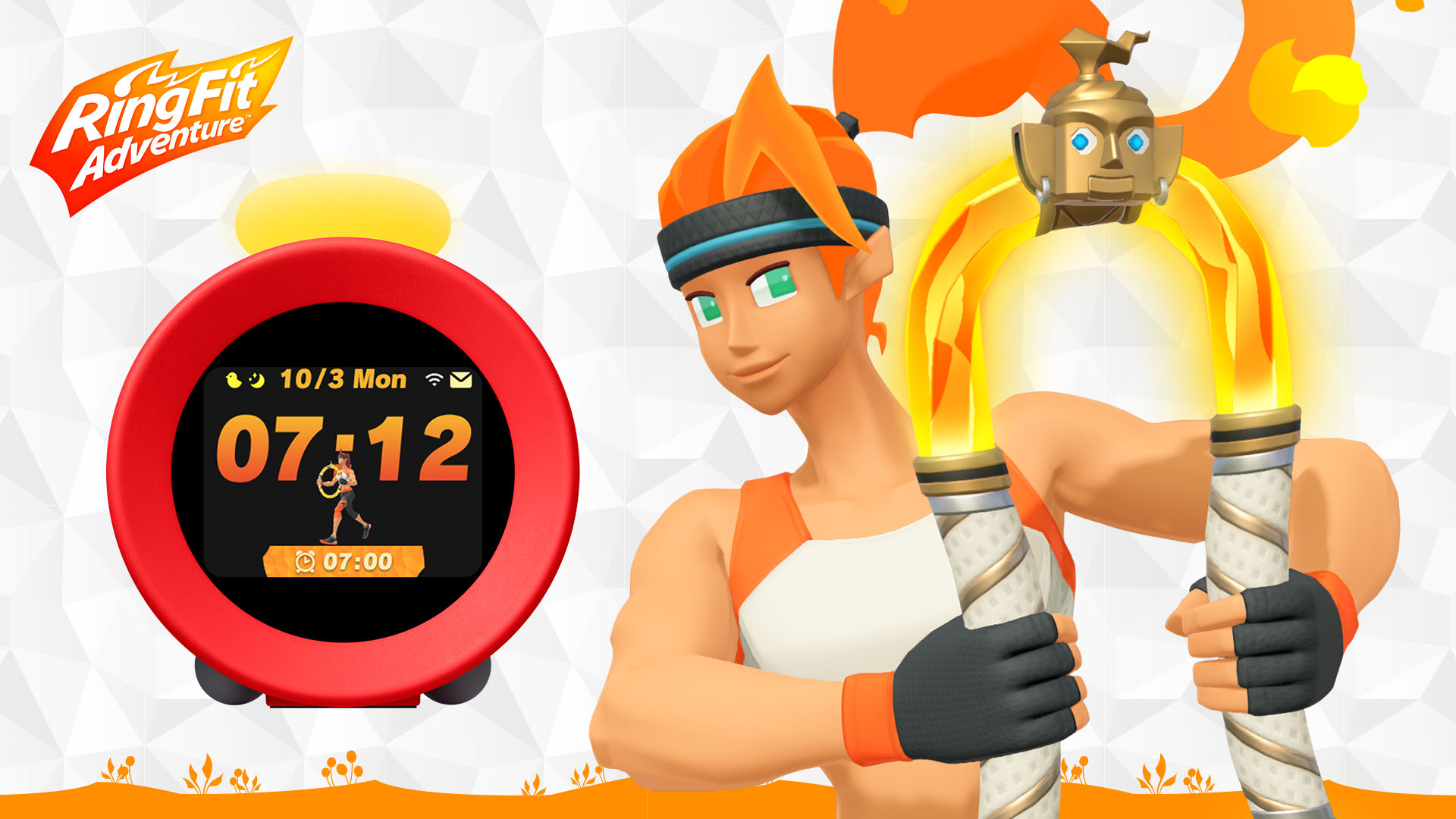
Just in case it wasn’t enough for Nintendo to shadow drop Nintendo Sound Clock: Alarmo on us, they also saw fit to ensure Alarmo was the latest project to be covered during their “Ask the Developer” interview series. Across four chapters, Producer Yosuke Tamori and Director, Tetsuya Akama were asked many questions, and now it is time to hear their answers.
When talking about Alarmo, Tamori and Akama explained why videogame music was chosen:
Nintendo Sound Clock | Alarmo Devs on Using Videogame Music for Alarmo:
Tetsuya Akama: When the project started, we had a meeting where we discussed how we would like to wake up. One thing that triggered the idea of using game music was when the team got excited over the theme of “Waking up one morning to find I was…”. While coming up with ideas like, “Waking up to find I was on a beach in Hawaii”, and “Waking up to find I was a baby”, the conversation started drifting toward the idea that it would be great if you could wake up somewhere different every morning, like you’re travelling.
The conversation settled on how nice it would be to wake up in a game world, and so we decided to use game music. As if you’re waking up on a beach or on a grassy plain, just by changing the alarm sound, the scenes that you wake up to change as if you’re travelling. I believe that this is the unique power of Nintendo’s music to express the game’s world and atmosphere through sound.
We thought it would be best to have as many tracks as possible because if you get used to the same alarm sound, it could get harder to wake up no matter how loud it is. With that in mind, we’ve made it so you can either set the game music that plays as an alarm yourself or randomise it. More variety in sound means more variety in your daily waking up experience. So I think this might make it easier for you to get out of bed, and you start looking forward to waking up.
Also, background music plays for a while after the alarm stops, and Alarmo responds to your movement with sound to create an atmosphere of being in a game world. Many people will gradually start to wake up as they move around. I’d be happy if people experienced waking up invigorated, as if in a game world, by moving their bodies.
There were times when we considered whether or not to have game-like elements, but we decided against it from quite an early stage of development.
Yosuke Tamori: If we implemented game-like elements, it can be assumed that users would continue to play with it in bed. In that case, it might end up disturbing their sleep instead. We didn’t want to create that kind of situation because we wanted users to wake up refreshed. So we decided early on to exclude such playable elements.
Tetsuya Akama: It’s always been our hope that people will continue to use Alarmo for a long time. With that in mind, we were also concerned that game-like elements might not be compatible. For example, if we were to create a system in which you receive a reward every time you wake up, it may motivate you to wake up as long as you’re still receiving the reward. But if we create that system, once the rewards stop, you may lose your motivation to wake up.
What’s worse, once you get used to that system, you might even start to think, “Well, if there’s no reward, then I don’t need to get up”. We concluded that it would be best to remove game-like elements to encourage users to continue using it for a long time. Also, there were comments from the development team like, “Let’s not give users more tasks to do”.
Yosuke Tamori: We decided not to implement elements that could restrain the user’s actions or be overly pushy. If we’d wanted to, we could’ve even implemented a system where users get a gold medal for waking up earlier than the alarm time and a bronze medal for waking up later. But that would’ve also meant pushing the idea on users that “waking up early is good, therefore you should wake up early”. That may be right for some people, but when it comes to Alarmo, we wanted it to be something that gently supports you.
Regardless of whether you wake up early or late, it has the feature to simply record the number of hours you’ve rested each night. We hope that Alarmo will stand in a place where people will casually use it for a long time.
For the full interview, why not click here to check out Ask the Developer Vol. 14, Nintendo Sound Clock: Alarmo – Chapter 4:
Ask the Developer | Nintendo Sound Clock: Alarmo (Participating Developers)
- Yosuke Tamori | Entertainment Planning & Development Division, Production Group No.4 (Producer)
- Tetsuya Akama | Technology Development Department, Technology Development Group No.1 (Director)
Share this:

Discover more from
Subscribe to get the latest posts sent to your email.