

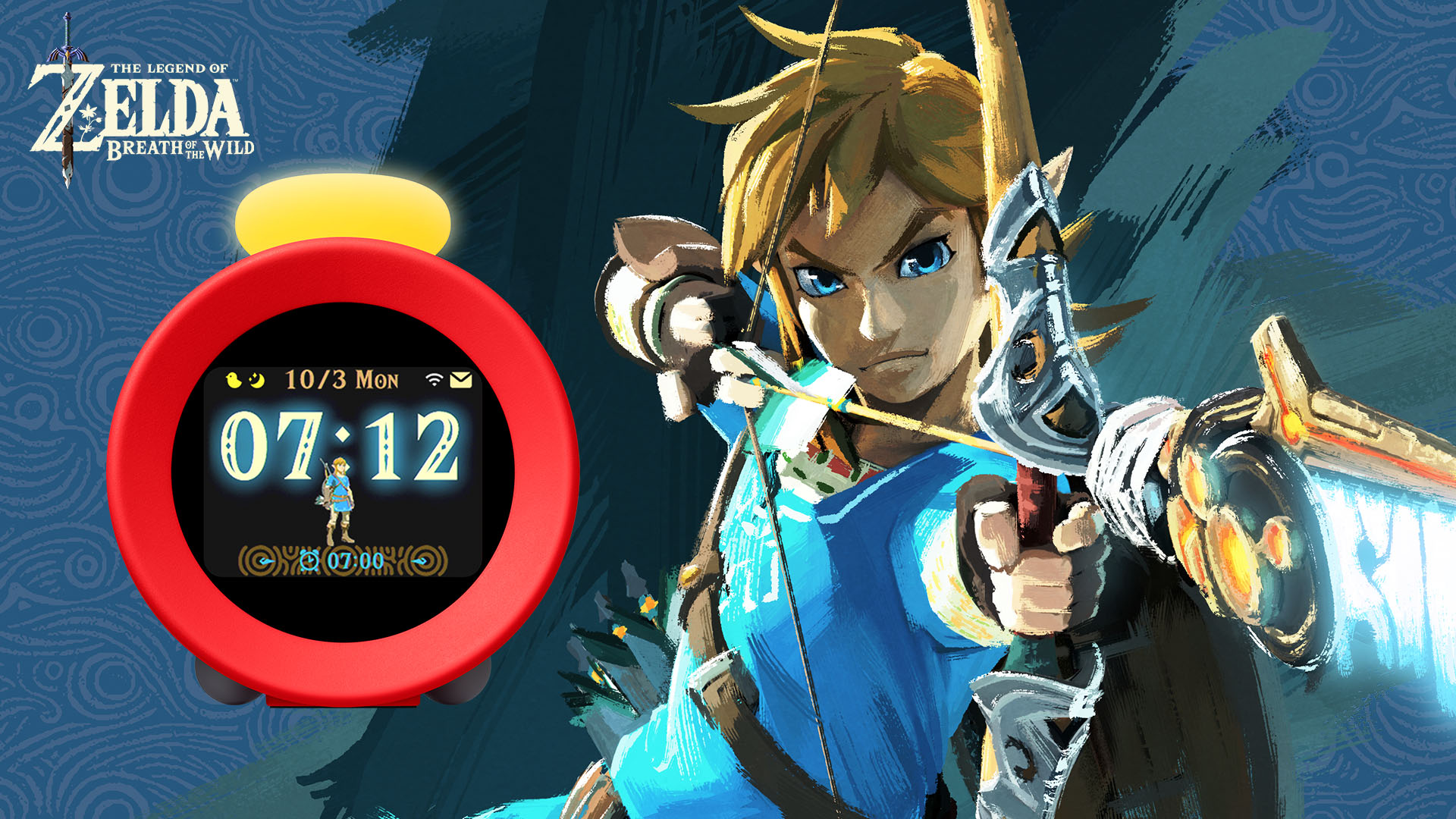
Just in case it wasn’t enough for Nintendo to shadow drop Nintendo Sound Clock: Alarmo on us, they also saw fit to ensure Alarmo was the latest project to be covered during their “Ask the Developer” interview series. Across four chapters, Producer Yosuke Tamori and Director, Tetsuya Akama were asked many questions, and now it is time to hear their answers.
When talking about Alarmo, Tamori and Akama discussed the difficulties they faced when working together to create Alarmo:
Nintendo Sound Clock | Alarmo Devs on Co-Developing Alarmo:
Yosuke Tamori: When it’s just software development, prototype tests can be done by the software developers alone, so in a sense, everything moves very quickly. But when hardware development is involved, as in this case, you need to create the hardware, control the internal equipment and sensor, run the application, and so on, which makes the development process complex.
For example, if the system software doesn’t control the sensor correctly, it causes the alarm sound emitted by the software to become unstable. On another occasion, you might put the sensor’s lack of responsiveness down to an issue with the system software, when it was in fact caused by a slight change in the hardware design.
Tetsuya Akama: Now that you mention it, I remember struggling when a slight change in the shape around the sensor made it less responsive. I had it pegged as an error in the system software, so I couldn’t track down the cause. It’s especially tricky if it’s not your area of expertise.
Yosuke Tamori: Just inserting another part in between or slightly changing the material or shape can affect its behaviour. Because the system software and the application had to be modified in accordance with changes to the hardware, we eventually had to ensure that we were sharing all our processes with each other and running them in parallel. Having to follow a completely different development process from that of standard game software was a challenge from the software development side.
Conversely, working on the entire development process within the team – from hardware design to system software and application development – was beneficial as we could quickly track down the cause and take measures in case of issues.
Tetsuya Akama: In terms of hardware development, it was a real challenge to come up with the specifications from scratch. Game consoles that I’ve worked on until now had certain rules, such as the shape of the hardware and number of buttons. But this time, since it’s not a gaming console, there were no such rules. It was quite challenging to decide the specifications without any criteria, such as what kinds of buttons were necessary and how many of each.
Yosuke Tamori: The gulf between our respective development cultures and personalities led to quite a few…differences in understanding. (Laughs) Relatively speaking, Akama-san and I are designers, so we tend to use abstract words. But fuzzy expressions are difficult to understand for system software programmers and hardware engineers who are used to creating things with precision. If we go up to them and share how we want to improve the responsiveness further, they’ll ask for specifics like, “Well, then how many seconds is acceptable?”.
Tetsuya Akama: Or if we tell them, “Make it go boing!”, the programmers might come back with, “Define boing”.
Yosuke Tamori: I watched Akama-san being questioned by the programmers out of the corner of my eye thinking, “How on earth do you expect them to understand that, Akama-san…?”. (Laughs) I had similar experiences during game development, so I knew to some extent that talking in abstract terms wasn’t a good strategy with programmers, but Akama-san seemed new to it, so I think he struggled a little in that area.
Tetsuya Akama: Halfway through development, I started taking photos and videos of myself falling asleep and waking up, editing in sound and using it to explain how I wanted sound effects to play when I stretched, and so on.
For the full interview, why not click here to check out Ask the Developer Vol. 14, Nintendo Sound Clock: Alarmo – Chapter 2:
Ask the Developer | Nintendo Sound Clock: Alarmo (Participating Developers)
- Yosuke Tamori | Entertainment Planning & Development Division, Production Group No.4 (Producer)
- Tetsuya Akama | Technology Development Department, Technology Development Group No.1 (Director)
Share this:

Discover more from
Subscribe to get the latest posts sent to your email.