

Welcome to EXPlay, (Explain & Play) the review series where we care not for scores, but tell it how it is when it comes to every game we get our hands on, all whilst including some lengthy gameplay, to give you, the reader, the chance to form your own impressions and views while reading and watching.
In this explanatory review, we’re covering Selfloss by developer, Goodwin Games:

Selfloss (Nintendo Switch)
Selfloss invites you into a world where every movement feels significant, not just because of the game’s mechanics but due to the emotional weight tied to them. You play as an old, weathered man whose every step and action communicates exhaustion. Rolling in the game, for example, is not your typical fast-paced dodge; it’s a sluggish tumble that perfectly reflects the protagonist’s age and weariness. There’s a deliberate sense of slowness to everything—whether you’re sprinting or shining your light staff to clear obstacles. Combat is simple but satisfying, involving bursts of light to dispatch enemies like “meatball folk.” The haptic feedback through the Switch’s controller adds a satisfying weight to every action, especially when clearing away the game’s many slimy obstacles.
While the methodical pace adds depth to the character, it can sometimes slow things down a bit too much. At times, I found myself uncertain about what to do next. The game leans heavily on environmental cues that aren’t always clear, and the frequent puzzle sections occasionally left me wandering in confusion. Still, when you do figure things out, there’s a certain joy in watching the world respond to your actions—whether it’s cleansing a whale of gunk or unlocking a bridge to a new area. Selfloss is a meditative experience, but its leisurely gameplay can test your patience in some places.
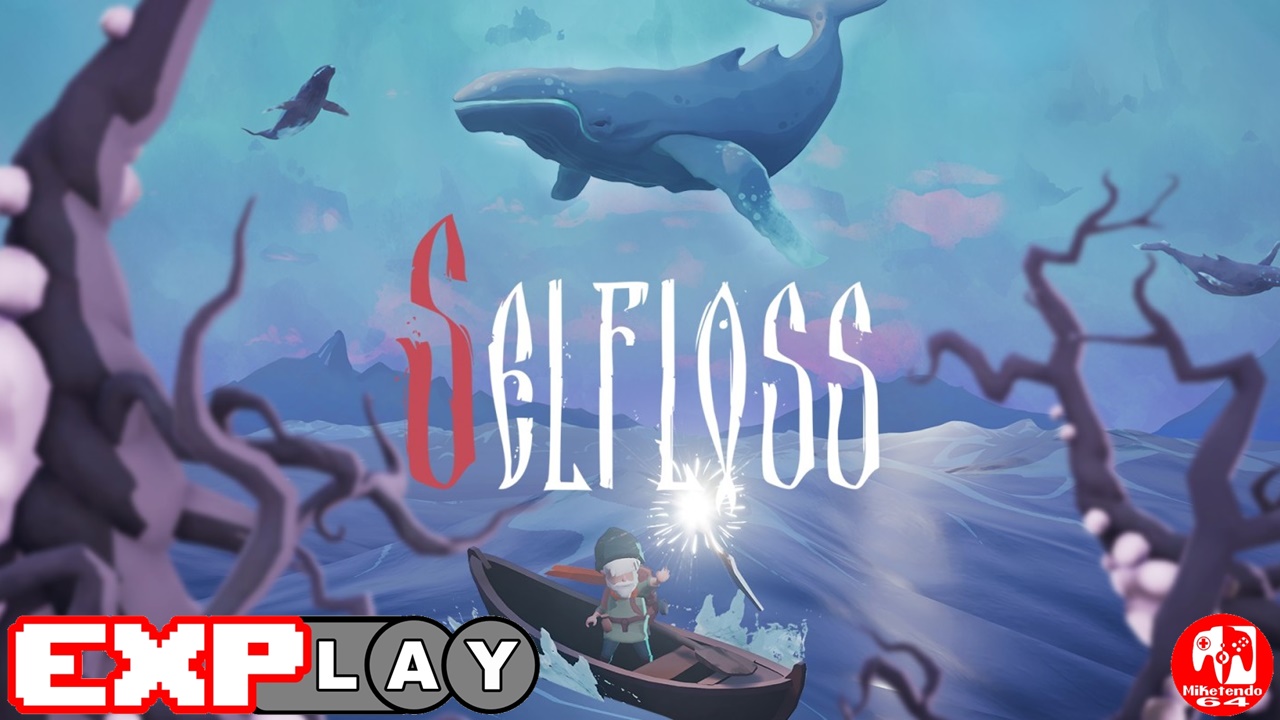
The visual style of Selfloss is both melancholic and surreal. The game bathes you in soft, muted colors, with purples, blues, and grays dominating the palette. It’s a beautiful world, but not in a traditionally vibrant sense—there’s a quiet sadness that permeates everything, from the ruins you explore to the desolate islands you traverse. This fits perfectly with the game’s themes of loss and healing. The design of the characters, from the long, ghostly goose-like figures to the large, fish-adorned women, feels symbolic yet grounded, as if each element carries its own metaphorical weight. The 3D models are simple but effective, offering enough detail to bring life to the world without overwhelming the eyes.
What truly stands out is how the game blends the mundane with the fantastical. You’ll find yourself sailing across eerily calm waters one moment, only to unlock cosmic bridges or cleanse sky-bound whales the next. It’s a world where mythology and reality blur seamlessly, and the art direction does a fantastic job of reinforcing that surreal tone. However, there are moments when the environments feel a bit repetitive, and while the design is striking, more variety in the landscapes might have kept things more engaging over the long haul.
The narrative of Selfloss is as heavy as the game’s atmosphere suggests. You are in a place called Leeway—a purgatory where people are stuck until they are ready to “take on the form of a fish to ascend.” It’s a bizarre but compelling premise, filled with cryptic characters and haunting, metaphorical moments. You start by meeting Marena, a towering figure who oversees this spiritual limbo. As you explore, you slowly uncover the meaning of Selfloss, a ritual meant to heal the wounds of grief, requiring both an item of personal value and the “essence of the Loss fish.” The game’s narrative dances between quiet sorrow and occasional dark humor, like when I couldn’t stop laughing at the concept of fish embodying the idea of bereavement.
While the story is rich in symbolism, it’s not always clear what’s going on or what’s expected of you. The vagueness of the plot works on a thematic level—after all, this is a game about grief, and grief is often confusing and hard to process. But from a gameplay perspective, the lack of clear direction can be frustrating. Still, if you’re willing to lean into the ambiguity, Selfloss offers a story that’s as haunting as it is poetic.
The sound design in Selfloss amplifies its emotional depth, with a soundtrack that ebbs and flows like the tide. The ambient music is often subdued, almost barely there, with soft strings and melancholic piano notes playing in the background as you explore. This minimalist approach fits perfectly with the game’s overall mood, creating a meditative, almost spiritual atmosphere. The sounds of the world—the creaking of boats, the crunch of gravel underfoot, and the echo of your staff’s light—add texture to your journey, immersing you deeper into Leeway’s haunting realm.
One of the standout elements is the voice acting—or rather, the lack of it. Characters speak in cryptic text, and the absence of spoken dialogue feels intentional, drawing more focus to the world’s eerie silence. The auditory cues during combat, especially the satisfying pop when you defeat an enemy, contrast sharply with the quiet exploration, making these moments feel impactful. However, there were times when the silence felt a bit too heavy, and I found myself craving a bit more in the way of sound variety as I moved through similar environments.
Selfloss is a game that excels in creating an emotional experience. Its slow-paced gameplay, melancholic visuals, and somber story weave together into a meditative journey about loss and healing. However, the game’s vagueness—both in its narrative and its environmental cues—can leave you feeling a little lost, unsure of where to go or what to do next. While I enjoyed my time in its strange, fish-filled world, there were moments of frustration where I wished for more direction.
If you’re someone who enjoys games that encourage reflection and don’t mind a slower, more methodical pace, Selfloss will certainly hook you. Just be prepared for a few moments where the game’s cryptic nature leaves you adrift, paddling your way through its sea of mysteries.
Game Specifications:
Developer: Goodwin Games
Publisher: Merge Games
Platform: Nintendo Switch (eShop)
Category: Action, Adventure, Role-Playing
No. of Players: 1 (Single System)
Release Date: September 26, 2024
Price: $29.99
File Size: 3.6 GB
Nintendo.com Listing

